


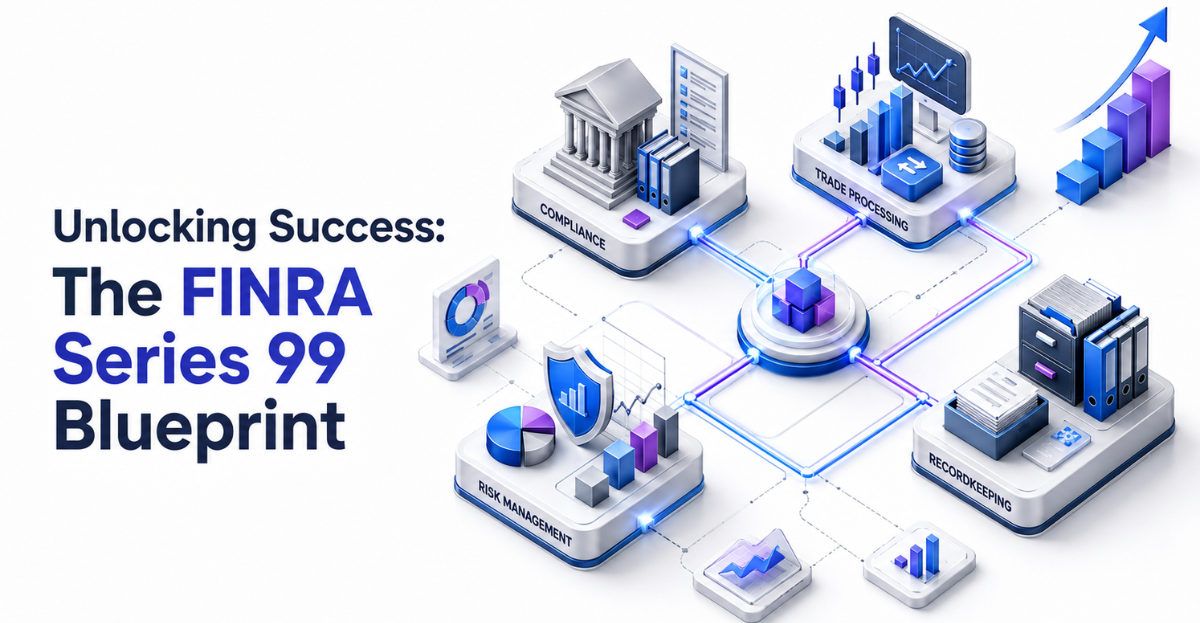
 The FINRA Series 99, officially known as the FINRA Operations Professional Exam, represents a critical credential for individuals working in or aspiring to key operational roles within the financial services industry. This qualification validates a professional's foundational knowledge of the securities industry, particularly concerning the regulatory requirements and operational processes essential for maintaining compliance and efficiency. Designed by FINRA, the Series 99 is specifically tailored for those who manage and supervise the back-office functions that underpin brokerage firms, investment banks, and other financial entities. This comprehensive article delves into the significance of the FINRA Series 99, exploring its career advantages, preparation strategies, and how it solidifies one's future in the dynamic financial landscape.
FINRA Series 99: Cornerstone for Financial Operations
The FINRA Series 99 examination plays a pivotal role in ensuring that operations professionals possess the requisite knowledge to support the integrity and efficiency of the financial markets. It focuses on the complex ecosystem of financial operations, including trade processing, recordkeeping, and regulatory reporting. Professionals holding this qualification are integral to managing the daily flow of transactions and safeguarding client assets, making them indispensable within any financial institution. The credential empowers individuals to navigate intricate operational challenges with confidence and expertise.
Validating Essential Operational Acumen
Achieving the FINRA Series 99 certification demonstrates a deep understanding of core operational functions and their regulatory implications. It signifies a candidate's ability to interpret and apply FINRA rules, SEC regulations, and other federal securities laws that directly impact financial operations. This level of comprehension is vital for minimizing risk, ensuring compliance, and optimizing workflow within a firm. The exam’s content ensures that certified professionals are well-equipped to manage the intricate details that keep the financial engine running smoothly.
Who Benefits from This Credential
The FINRA Series 99 is primarily targeted at individuals who perform or supervise operational functions. This includes roles such as operations managers, compliance officers, and back-office personnel who handle post-trade activities, customer records, and financial accounting. It’s also beneficial for those looking to advance into leadership positions within financial operations, offering a recognized benchmark of competence. Moreover, professionals seeking to understand the foundational operational elements of the financial industry will find immense value in this certification. For further details on the exam and its importance, visiting the official FINRA page is highly recommended.
Driving Career Advancement in Operations
Earning the FINRA Series 99 can significantly accelerate a career in financial operations, opening doors to advanced roles and greater responsibilities. It provides a competitive edge in a demanding industry, signaling to employers a commitment to professional excellence and a specialized knowledge base. The certification is increasingly becoming a standard for many operational leadership positions, highlighting its growing importance as a career differentiator.
Expanding Professional Horizons
The FINRA Series 99 qualification validates a professional's ability to oversee critical operational areas, which can lead to roles with broader scope and increased decision-making authority. This includes opportunities in middle-office and back-office management, risk management, and regulatory compliance. The credential positions individuals for upward mobility within their current firms or for new opportunities across the broader financial services sector. Professionals committed to financial industry excellence often look for ways to advance your career prospects through specialized certifications.
Navigating the Operations Professional Landscape
The landscape of financial operations is constantly evolving, driven by technological advancements and shifting regulatory environments. The FINRA Series 99 equips professionals with the foundational knowledge to adapt to these changes and contribute effectively to their organizations. It builds a robust understanding of operational best practices, ensuring that firms can execute transactions, maintain records, and comply with regulations efficiently and effectively. This adaptability is crucial for long-term career success in financial services.
Achieving FINRA Series 99 Qualification
Embarking on the journey to obtain the FINRA Series 99 involves several key steps, beginning with sponsorship and culminating in the successful completion of the examination. Understanding this process is crucial for effective planning and preparation, ensuring a smooth path to certification. Every candidate must meet specific requirements and navigate the FINRA registration framework.
Understanding the Registration Process
To sit for the FINRA Series 99 exam, candidates must be sponsored by a FINRA member firm. This sponsorship is a fundamental requirement, signifying that the firm believes the individual is suitable for the role and will adhere to industry standards. Once sponsored, the firm initiates the registration process through FINRA's Central Registration Depository (CRD) system, submitting the appropriate forms (typically a Form U4 Uniform Application for Securities Industry Registration or Transfer). Candidates then have a specific window to schedule and take the exam after their application is processed.
The Sponsoring Firm Requirement
The requirement of a sponsoring firm underscores the industry's emphasis on practical experience and ethical conduct. A sponsoring firm not only authorizes an individual to take the exam but also provides the necessary environment for them to gain real-world exposure to financial operations. This symbiotic relationship ensures that newly qualified professionals are ready to apply their knowledge in a regulated setting. Prospective candidates should actively seek employment with FINRA member firms that support professional development and qualification.
Exam Content and Competency Areas
While specific exam details for the FINRA Series 99 are not provided in the inputs, the examination is designed to assess a candidate’s proficiency across critical operational domains within the securities industry. It ensures that professionals understand the rules and regulations governing financial operations, as well as the practical application of these principles in daily tasks. The focus is on ensuring operational integrity, compliance, and efficiency.
Broad Domains of Operational Knowledge
The FINRA Series 99 generally covers broad categories of knowledge essential for operations professionals. These typically include understanding the securities industry structure, functions of different departments, trade and settlement processes, customer account maintenance, recordkeeping, and regulatory reporting requirements. Candidates are expected to demonstrate a comprehensive grasp of how these various elements interact to ensure smooth and compliant financial operations. Maintaining awareness of the comprehensive content outline is key for preparation.
Key Areas of Regulatory and Firm Operations
A significant portion of the FINRA Series 99 exam focuses on regulatory compliance, including understanding anti-money laundering (AML) regulations, insider trading rules, and ethical considerations. It also delves into a firm's internal operational controls and supervisory procedures designed to prevent fraud and ensure data integrity. This dual emphasis on external regulation and internal policy ensures that qualified professionals can uphold both industry standards and company best practices, which is vital for maintaining investor trust and market stability.
Strategic Preparation for the FINRA Series 99
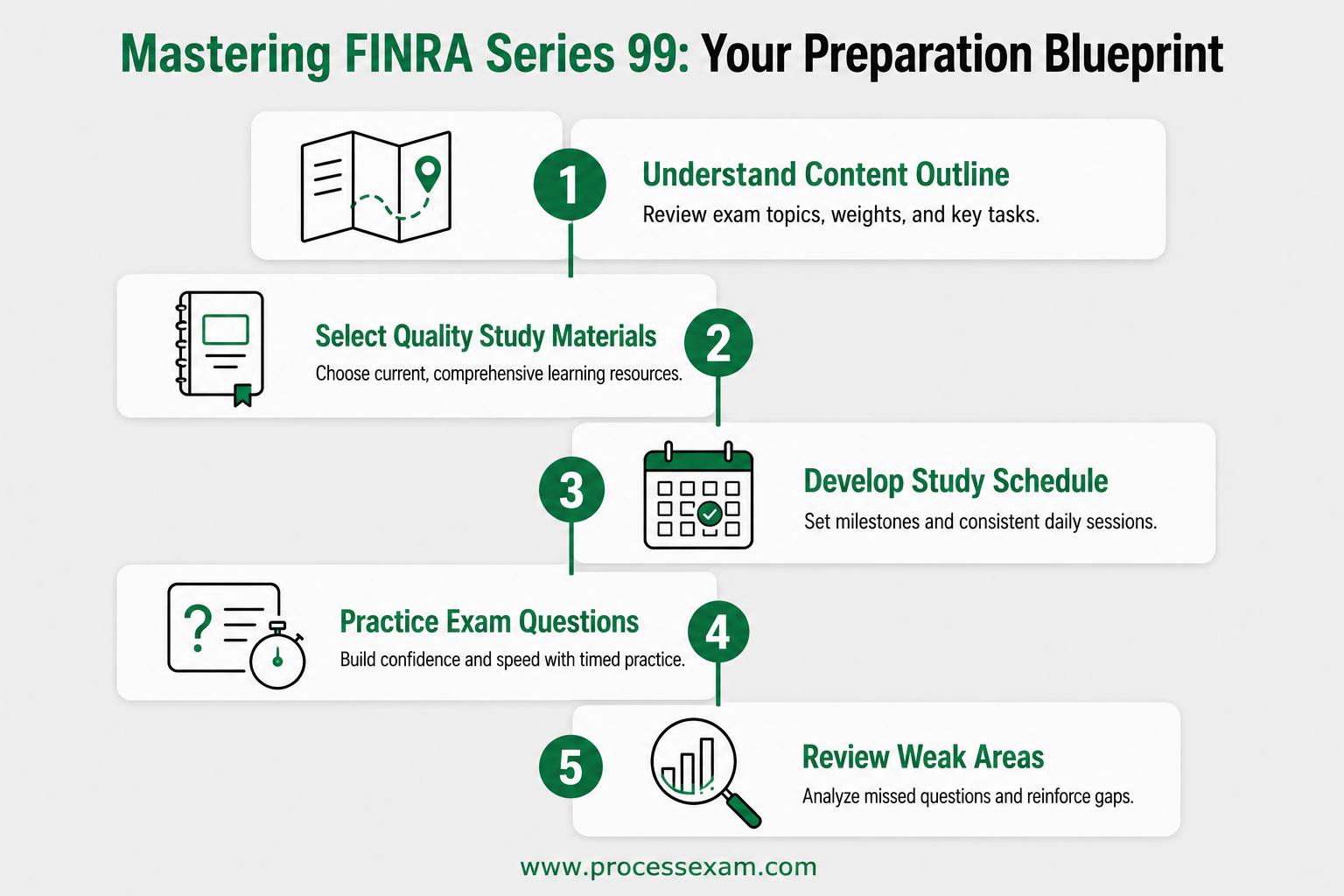
Preparing for the FINRA Series 99 requires a methodical approach, blending structured study with practical application to master the breadth of operational and regulatory knowledge. Effective preparation strategies can significantly boost confidence and readiness, setting the stage for exam success. A combination of diverse resources and consistent effort is often the most effective route.
Developing a Robust Study Plan
A well-structured study plan is the backbone of successful exam preparation. Candidates should allocate dedicated time each day or week for studying, breaking down the exam content into manageable modules. Prioritize understanding core concepts rather than rote memorization, as the exam often tests the application of knowledge. Regularly reviewing difficult topics and taking short quizzes can reinforce learning and identify areas needing further attention. This systematic approach is crucial for covering all necessary material.
Leveraging Quality Study Resources
Access to high-quality study materials is indispensable. This includes textbooks, online courses, and detailed study guides specifically designed for the FINRA Series 99. Many reputable providers offer comprehensive packages that align with the exam's content outline. Utilizing these resources can provide different perspectives and teaching styles, catering to various learning preferences. For those seeking dedicated preparation resources, exploring FINRA Series 99 resources can be a beneficial step. Additionally, gain further clarity on what it takes by reading this detailed insights article.
Practice Questions and Exam Readiness
Regularly tackling practice exam questions is paramount for understanding the exam format, question types, and time management. This not only familiarizes candidates with the testing environment but also highlights areas where additional study is needed. Analyzing explanations for both correct and incorrect answers can deepen understanding and correct misconceptions. Aim to complete full-length practice exams under timed conditions to simulate the actual test experience. To enhance your readiness, consider working through sample exam questions. This practical application of knowledge is a cornerstone of effective preparation.
Addressing Common Concerns: Difficulty and Pass Rate
Prospective candidates often wonder about the difficulty of the FINRA Series 99 exam and its associated pass rate. While it is a challenging qualification, a strategic approach to preparation can demystify its complexities and improve the chances of success. Understanding the nature of the exam helps in setting realistic expectations.
Is the FINRA Series 99 Challenging?
The FINRA Series 99 is considered challenging due to the breadth and depth of knowledge required, particularly in regulatory and operational compliance. It demands not just factual recall but also the ability to apply complex rules to hypothetical scenarios. Candidates often find the regulatory aspect to be the most rigorous part. However, with consistent study, high-quality materials, and a commitment to understanding the underlying principles, the exam is certainly passable. It tests a candidate’s dedication to understanding the nuances of financial operations rather than simply memorizing facts.
Understanding Exam Pass Rates
FINRA does not publicly disclose specific pass rates for individual exams like the Series 99. However, it's generally understood that all FINRA exams require significant dedication. The perceived difficulty often correlates with the rigor of the content, which ensures that only thoroughly prepared individuals earn the qualification. Instead of focusing on a hypothetical pass rate, candidates should concentrate on achieving a comprehensive understanding of the material. This focus on mastery is a more effective strategy for success than worrying about statistics.
Navigating the Retake Policy
Should a candidate not pass the FINRA Series 99 on their first attempt, FINRA has a clear retake policy. Generally, candidates must wait 30 days before their second attempt, another 30 days for a third attempt, and then 180 days for any subsequent attempts. This policy provides time for candidates to reassess their study strategies, review areas of weakness, and reinforce their knowledge before retrying. It emphasizes the importance of thorough preparation and learning from prior attempts.
The Career Trajectory with FINRA Series 99
The FINRA Series 99 certification is not merely a license to perform a job; it's a strategic investment in a long-term career within the financial services industry. It enhances marketability, provides a foundation for growth, and potentially leads to higher earning potential, cementing one's future in this dynamic field.
Expanding Opportunities in Financial Services
With the FINRA Series 99, professionals are better positioned to pursue diverse opportunities across various sectors of finance. These can include roles in brokerage operations, asset management, investment banking back-office, and regulatory compliance departments. The demand for qualified operations professionals remains strong, as firms continuously seek individuals who can ensure compliance and operational efficiency in an increasingly complex regulatory landscape. The credential is a clear signal of expertise and reliability.
Potential for Salary Growth
While salaries vary widely based on experience, location, and specific role, holding the FINRA Series 99 typically correlates with increased earning potential. It often enables professionals to qualify for more senior positions that come with greater compensation. The specialized knowledge and regulatory understanding validated by the Series 99 are highly valued, contributing to a competitive salary package and long-term financial growth. This certification distinguishes individuals who are truly committed to a career in operational excellence within finance.
Distinguishing FINRA Series 99 from Series 7
Understanding the unique focus of the FINRA Series 99 is crucial, especially when comparing it to other foundational exams like the Series 7. While both are critical FINRA qualifications, they serve distinct purposes within the financial industry, validating different skill sets and opening different career paths.
Operational Focus vs. Sales & Trading
The fundamental difference lies in their primary focus. The FINRA Series 99 is specifically designed for operations professionals, concentrating on the back-office functions, regulatory compliance, and internal procedures that support trading activities. It ensures that the operational backbone of a firm is strong and compliant. In contrast, the FINRA Series 7 (General Securities Representative Exam) is for professionals who sell securities products to the public, focusing on client interaction, sales practices, and market knowledge. It’s primarily a sales and customer-facing qualification.
Complementary Qualifications
While distinct, the Series 99 and Series 7 can also be complementary for individuals aiming for hybrid roles or seeking a broader understanding of the financial ecosystem. For example, a professional with a Series 7 might pursue a Series 99 to better understand the operational impact of sales activities, or an operations professional might acquire a Series 7 to bridge knowledge gaps with front-office functions. Each exam offers a unique lens into the financial markets, contributing to a more comprehensive professional profile when combined.
Sustaining Professional Excellence
Earning the FINRA Series 99 is a significant milestone, but it is also the beginning of an ongoing commitment to professional development. The financial industry is dynamic, requiring continuous learning and adaptation to maintain relevance and expertise. Sustaining professional excellence ensures long-term career success and continued impact.
Beyond the Initial Qualification
The financial services sector is subject to constant changes in regulations, market dynamics, and technological advancements. Operations professionals with the FINRA Series 99 must engage in continuous learning, including FINRA's Continuing Education (CE) requirements, to stay current. This ongoing education ensures that their knowledge remains sharp and applicable, allowing them to effectively navigate new challenges and opportunities. Commitment to learning is key for any professional aspiring to lead in this industry.
Building a Lifelong Career in Financial Operations
A career in financial operations, bolstered by the FINRA Series 99, offers stability and growth for those who embrace lifelong learning. By staying informed about industry trends, participating in professional networks, and seeking out new challenges, operations professionals can build a resilient and rewarding career. This credential serves as a strong foundation, but it is the continuous pursuit of knowledge and expertise that truly shapes a future of sustained success and leadership within the financial services world.
The FINRA Series 99 certification is far more than just another exam; it’s a strategic step towards a robust and rewarding career in financial operations. It offers a clear pathway to demonstrate essential operational and regulatory knowledge, setting you apart in a competitive industry. By pursuing this credential, you validate your expertise, unlock new career avenues, and position yourself as a crucial asset in maintaining the integrity and efficiency of financial markets. The journey is challenging, yet the professional dividends are substantial, promising a future built on competence and opportunity.
Are you ready to elevate your career and establish yourself as an indispensable operations professional? Take the decisive step towards mastering financial operations and compliance. Explore diverse certification pathways to skyrocket your career advantages and achieve your professional aspirations. The FINRA Series 99 awaits to transform your potential into tangible success, forging a future where your operational insights drive critical outcomes.
Frequently Asked Questions
1. What is the primary purpose of the FINRA Series 99 exam?
The FINRA Series 99 exam, or Operations Professional Exam, certifies an individual's knowledge of the securities industry, particularly focusing on the regulatory requirements and operational processes within financial firms. It ensures professionals can manage back-office functions compliantly and efficiently.
2. Who is required to take the FINRA Series 99 exam?
The exam is generally required for individuals who perform or supervise operational functions within a FINRA member firm. This includes roles involved in trade processing, recordkeeping, customer account maintenance, and regulatory reporting.
3. Do I need a sponsoring firm to take the FINRA Series 99?
Yes, candidates must be sponsored by a FINRA member firm to be eligible to sit for the Series 99 examination. The firm initiates the registration process through FINRA's Central Registration Depository (CRD) system.
4. How difficult is the FINRA Series 99 exam?
The FINRA Series 99 is considered challenging due to its comprehensive coverage of regulatory compliance and operational procedures. It requires both factual recall and the ability to apply complex rules to real-world scenarios. Thorough preparation is key to success.
5. What career benefits does the FINRA Series 99 offer?
The FINRA Series 99 enhances career mobility, increases marketability, and can lead to advanced operational and compliance roles within financial services. It demonstrates a commitment to professional standards and often correlates with higher earning potential.