
PMI


The Professional in Human Resources (PHR) certification, offered by HRCI (Human Resources Certification Institute) under exam code PHR, signifies a professional's mastery of the technical and operational aspects of HR management. This credential validates an individual's expertise in HR policies, practices, and laws, excluding strategic planning, which is covered by the SPHR certification. Aspiring and current HR practitioners looking to solidify their foundational knowledge and advance their careers in human resources will find immense value in pursuing this certification. This article explores how the PHR certification acts as a strategic asset, enabling HR professionals to navigate the complexities of the modern workforce and contribute to their organizations' long-term success.
Achieving the PHR certification is a clear signal of an HR professional's dedication to the field and their comprehensive understanding of operational HR principles. This credential is not merely a testament to theoretical knowledge but a practical validation of the skills needed to implement HR programs and policies effectively. It confirms a professional's ability to manage day-to-day HR functions, ensuring compliance and fostering a productive work environment. The benefits extend beyond individual recognition, enhancing an organization's overall HR capabilities.
PHR certification benefits individuals by:
• Demonstrating comprehensive knowledge in core HR areas, including employee relations, labor law, and talent acquisition.
• Enhancing professional credibility and marketability in a competitive job landscape.
• Providing a structured framework for continuous learning and professional development.
• Often leading to increased earning potential and access to more challenging roles.
Organizations also gain significantly, as PHR-certified professionals bring a higher standard of expertise and best practices to the HR department. To understand the value proposition of PHR certification, consider its direct impact on operational excellence and risk mitigation within HR functions.
The HRCI Professional in Human Resources (PHR) exam is a rigorous assessment designed to evaluate a candidate's practical knowledge and application of HR principles. Understanding the specifics of this exam is crucial for effective preparation. The exam, identified by exam code PHR, is structured to cover various functional areas of human resources management, ensuring a broad and deep understanding of the profession.
Key details of the PHR exam framework include:
• Exam Name: HRCI Professional in Human Resources
• Exam Code: PHR
• Exam Price: USD $395, which covers the cost of registration and taking the exam.
• Duration: Candidates are allotted 120 minutes for the exam itself, with an additional 30 minutes provided for administrative tasks.
• Number of Questions: The exam comprises 115 multiple-choice questions, requiring careful time management and accurate responses.
• Passing Score: A score of 69% is required to pass the PHR exam, emphasizing a strong grasp of the material across all tested domains.
These details highlight the commitment and preparation required to successfully earn the PHR certification. For comprehensive requirements and the latest updates, candidates should always refer to the HRCI official page.
The PHR certification rigorously validates a professional's grasp of operational HR competencies, which are critical for effective workforce management. While a detailed syllabus is not provided here, the certification generally focuses on key HR functions that are essential for daily HR operations. These foundational areas ensure that certified professionals can confidently handle a wide range of HR responsibilities.
The Professional in Human Resources (PHR) credential affirms expertise in crucial areas such as:
• Employee Relations: Managing workplace dynamics, conflict resolution, and fostering a positive organizational culture.
• HR Operations: Overseeing administrative functions, HR technology, and data management to ensure efficiency.
• Talent Acquisition: Understanding recruitment, selection, and onboarding processes to attract and retain skilled employees.
• Total Rewards: Administering compensation, benefits, and recognition programs in compliance with regulations.
• Workforce Planning and Employment: Developing strategies for staffing, succession planning, and organizational development.
• Risk Management and Compliance: Navigating labor laws, ethical considerations, and safety regulations to minimize organizational liability.
This broad coverage equips PHR-certified individuals to address the immediate needs of an organization's human capital. The depth of knowledge expected for the PHR exam topics enables HR professionals to implement compliant and effective HR solutions. Further insights into the core concepts can be found by exploring Professional in Human Resources on a broader scale.
The PHR certification serves as a powerful catalyst for career progression, distinguishing individuals in a competitive job market. Professionals holding this credential often experience enhanced visibility, increased opportunities, and a tangible boost in their earning potential. The Professional in Human Resources (PHR) salary expectations typically surpass those of uncertified counterparts, reflecting the recognized value and expertise associated with the designation.
Gaining the PHR certification unlocks several career advantages:
• Enhanced Employability: Many employers list PHR as a preferred or required qualification for HR specialist and generalist roles, leading to more PHR certification jobs.
• Increased Earning Potential: Data consistently shows a higher average salary for PHR-certified professionals, validating the investment in time and resources.
• Professional Recognition: The certification signals a high level of professionalism and commitment to ethical HR practices.
• Career Advancement: It provides a solid foundation for moving into more senior operational HR roles or specializing in a particular HR domain.
This credential not only validates existing skills but also opens doors to new challenges and responsibilities, positioning professionals for long-term success. It's important for individuals to consider the worth of PHR certification as a strategic investment in their professional future.
Successful attainment of the PHR certification hinges on a well-structured and disciplined preparation strategy. HRCI PHR exam prep requires more than just memorization; it demands a deep understanding of HR principles and their practical application. Candidates should allocate sufficient time for study, typically several months, to thoroughly cover the breadth of PHR exam topics.
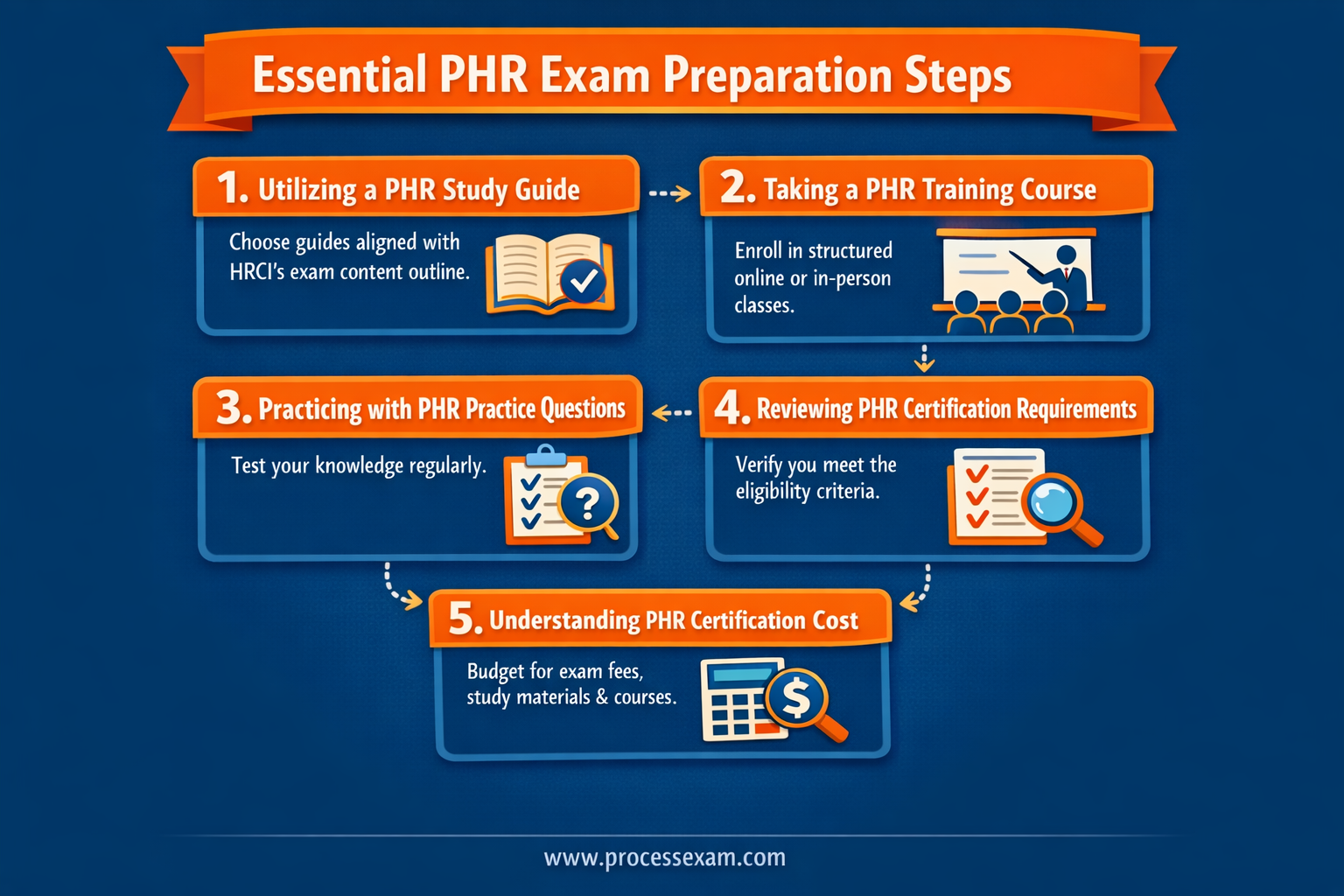 Key components of an effective PHR study plan include:
• Utilizing a Professional in Human Resources (PHR) Study Guide: Opt for guides from reputable providers that align with HRCI's exam content outline.
• Engaging in a Professional in Human Resources (PHR) Training Course: Structured courses, whether online or in-person, offer comprehensive coverage and expert guidance.
• Practicing with HRCI PHR Practice Questions: Regularly testing your knowledge with practice questions helps identify weak areas and familiarize you with the exam format. For robust preparation, considering platforms offering comprehensive PHR certification preparation resources is beneficial.
• Reviewing PHR Certification Requirements: Ensure you meet all eligibility criteria before investing time and resources in preparation.
• Understanding PHR Certification Cost: Factor in exam fees, study materials, and any training courses into your overall budget.
A balanced approach combining official resources, supplementary study materials, and consistent practice is the best pathway to mastering the material and confidently passing the exam. This holistic approach is how to get PHR certification effectively, minimizing stress and maximizing your chances of success.
Earning the PHR certification is a significant achievement, but maintaining its validity is equally important for continued professional recognition. The HRCI requires PHR-certified professionals to engage in ongoing professional development and recertify periodically. This ensures that their knowledge remains current with evolving HR practices, laws, and technologies.
PHR certification renewal typically involves:
• Accumulating a specific number of continuing education credits (CEUs) over a three-year cycle.
• These credits can be earned through various activities, including attending workshops, seminars, webinars, or completing relevant coursework.
• Alternatively, recertification can be achieved by retaking the PHR exam if the CEU requirements are not met.
This commitment to continuous learning underscores the dynamic nature of the HR profession and the importance of staying abreast of industry changes. Maintaining the PHR credential demonstrates an ongoing dedication to excellence in human resources.
The PHR certification is more than just a credential; it is a strategic investment in an HR professional's future and a powerful tool for organizations aiming to future-proof their human capital management. By validating a professional's operational HR expertise and commitment to best practices, the Professional in Human Resources (PHR) certification enhances individual careers and strengthens organizational HR capabilities. It signifies a readiness to navigate daily HR challenges with competence and confidence, ensuring that HR functions are not just responsive but proactively strategic.
Embarking on the journey to earn your PHR certification can redefine your career trajectory and enhance your professional influence. Whether you are aiming to solidify your foundational knowledge, increase your earning potential, or lead your organization's HR efforts with greater assurance, the PHR credential provides the robust framework you need. Start exploring the possibilities and discover your next steps towards achieving this impactful certification today.
1. What is PHR certification?
The PHR (Professional in Human Resources) certification is a credential offered by HRCI that validates an HR professional's mastery of operational and technical HR principles, policies, and laws.
2. How long is the PHR certification valid?
The PHR certification is valid for a three-year period. To maintain the credential, professionals must meet recertification requirements, typically by earning continuing education credits or retaking the exam.
3. What are the main benefits of obtaining PHR certification?
Key benefits include enhanced professional credibility, increased marketability in the job market, potential for higher salary, and a deeper understanding of HR operational aspects and compliance.
4. What is the typical PHR certification cost?
The exam fee for the HRCI PHR exam is USD $395. This cost does not include study materials, training courses, or application fees, which are additional investments for candidates.
5. Is the PHR exam difficult to pass?
The PHR exam is considered challenging and requires thorough preparation. With 115 questions and a 69% passing score, candidates need a strong grasp of foundational HR knowledge and effective study strategies to succeed.